
Written by Sophie Alcock
As an international student, Bonfire Night is a British institution I had never previously been privy to. But the prospect of a free fireworks display would excite anyone, so on this mild November evening, I decided to call my friends out for an impromptu gathering.
I managed to enter St Corams’ Park after making my way through the snaking entry queue. Meanwhile, in a parallel queue, my friends were unfortunately told the space had reached capacity. Finding myself alone in a crowded park with half an hour until the show, I had nothing better to do than to wait. Instead, I stood and watched the scene around me: children playing, teenagers crying, parents catching up with one another.
My friends describe me as a collected person, yet large crowds make me feel irrationally perturbed. Standing in the sea of people meant no personal space. Once you chose your spot, that was it; leaving meant an inevitable loss of the best view of the night. As I settled in, what struck me wasn’t just my own discomfort, but the general chaos around me. Unattended children ran about, disappearing in and out of the crowd. Suddenly, the matching wristbands for parents and children made sense; it was evident this was not the first year many children had found themselves lost. Still, the parents seemed unfazed, and it did not seem like my place to say anything.
A celebratory atmosphere enveloped the participants, with lively music and performances filling the park. Local groups and aspiring musicians enthused the onlookers with their acts, and I certainly found it an entertaining show. I was pleasantly surprised by the sense of community fostered at this event. At this park, I was surrounded by people of all backgrounds and ages coming together to celebrate a uniquely English tradition. Something about it was truly wholesome and inclusive; no one needed to justify themselves to have a good time. Just as I started to get restless from the wait, a girl pushed her way past the crowds in tears, followed by some concerned-looking friends. It seemed that this event would not be remembered fondly by some. Perhaps to some, this would become a memory of separation or loss, rather than one of unity.
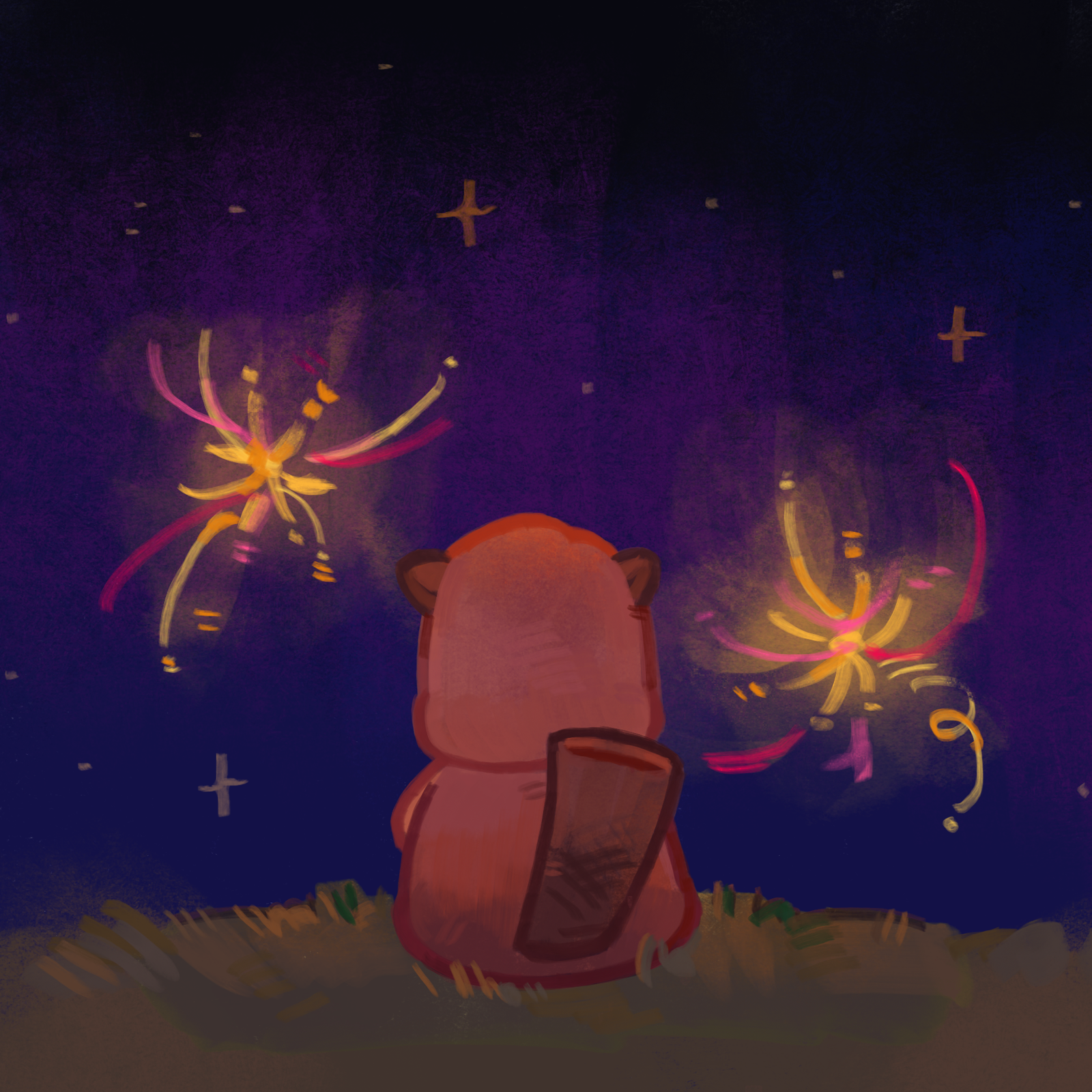
The firework display was phenomenal. Audible gasps were heard as the flares shot up and bloomed into grandiose bursts of coloured lights. Just as the display seemed to end, the next round of even bigger fireworks went off. It made the wait all the more worth it. In the midst of the display, I saw, in the literal corner of my eye, someone turning their back to the fireworks, filming themselves. This moment of dissonance caught me off guard. In the midst of this spectacle, how could someone tear themselves away from it? After their impromptu minute of fame, they coyly ran away towards the exit. This moment left me perplexed; however, I turned towards the fireworks to enjoy every last second I could.
Bonfire Night truly felt like a microcosm of the British experience. After all, the queue of prams and parents outside Nando’s after the display writes itself. These juxtapositions are the crux of social behaviour, people are never as orderly as you would like them to be. Yet these are the moments we all remember, whether it’s the influencer filming themselves with the fireworks or the kids who found themselves lost in a crowd of 4,800 people. Perhaps it was because I was by myself that I could reflect on these experiences. It seemed like a night everyone would remember, for better or for worse. Just as this Bonfire Night inspired a sense of awe in the children that attended, I left with a heart full of wonder and amusement.