
Written by Chloé Cerisier
“Behind every great man is a great woman.” Is that how the saying goes?
If you turn to history books, science appears to be a world dominated by white men. In reality, many great men have plagiarised, stolen from, and denied a great woman credit.
Polish physicist Marie Skłodowska-Curie is one of the most famous female scientists today, but she almost wasn’t. The Nobel committee eventually awarded her, alongside her husband, Pierre Curie, the Nobel Prize for Physics in 1903 for their study of spontaneous radiation. Yet, the committee initially wanted to exclude her simply because she was a woman.
Another brilliant physicist, Lise Meitner, who discovered nuclear fission – the splitting of atoms that led to the development of nuclear energy and atomic weapons – was not t as lucky. It was her collaborator, Otto Hahn, who took home the Nobel Prize in Chemistry in 1944 for their work. How? Hahn was partly able to do so because he downplayed Meitner’s role, referring to her in his acceptance speech as his assistant.
Many other scientists, inventors, and thinkers – who also happened to be women in times when it was frowned upon for them to pursue these “unlady-like” professions – were even less lucky. And while their work may have been just as brilliant as that of their male counterparts, we will likely never know their names.
In 1883, American suffragist Matilda Joslyn Fafe published an essay entitled “Woman as an Inventor,” criticising the belief that women possess “no inventive or mechanical genius.” To prove her point, she cited several examples of women inventors whose work was wrongly attributed to men. This phenomenon of women being denied recognition was later named the Matilda Effect by historian Margaret W. Rossiter.
This assertion that women simply do not possess genius qualities, perpetuated for centuries, is not just the result of disdain for women’s work, but also of their near-total exclusion from scientific and creative fields. For centuries, women couldn’t attend higher education, start their own businesses, own property, or file for patents unless they were unmarried. While some women tried to bypass these barriers, few succeeded, and hardly any made it to history books.
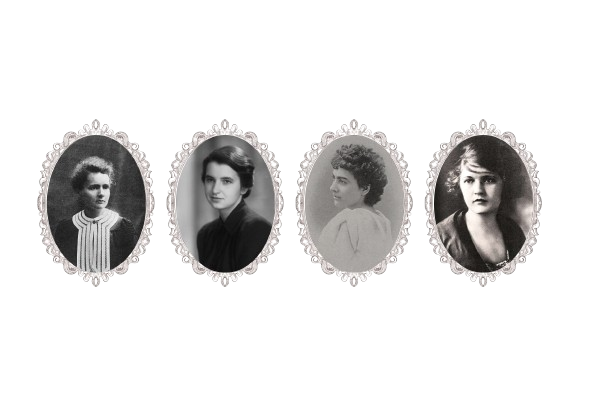
Some women had their ideas stolen by men. Rosalind Franklin discovered the double-helix structure to describe DNA, but James Watson and Francis Crick, who had discovered the single-helix, received the Nobel Prize. Margaret Knight invented a machine to manufacture flat-bottomed paper bags, but her design was stolen and patented by a man called Charles Annan. Margaret Keane painted the “big eyes” series, but her husband, Walter, claimed them as his own and became famous for them. Zelda Fitzgerald’s diaries and stories, which were incorporated into F. Scott Fitzgerald’s novels – including The Great Gatsby – were published without acknowledgement, while he discouraged her from publishing her own work.
Others died without recognition for their contributions. Ada Lovelace was the first to invent a computer program, but her work was attributed to her associate Charles Babbage. Lizzie Magie created the famous board game we know as Monopoly, but she died in obscurity. The patent for her game was later filed by Charles Darrow, who renamed it and sold it to Parker Brothers. Mary Anderson invented windshield wipers, but all companies rejected her invention until Robert Kearns took the idea and commercialised it in the 1950s.
While these women were eventually recognised for their contributions, how many more brilliant women have we never heard of? And how many women we only know as “assistants” or “helpful wives of genius men” – like Einstein’s wife, Mileva Einstein Marić, or Tolstoy’s wife, Sofia – were in fact as brilliant as their partners?
In 2017, the Smithsonian calculated that out of the 737 historical figures taught in schools, only 178 were women. Young girls still tend to associate brilliance and intelligence with men, and increasingly lose interest in STEM subjects as they grow up. Global female enrolment in fields like computer science or engineering remains staggeringly low. There is still much progress to be made.
Men might still stand on top of the world, but many would not be where they are today without the discoveries, inventions, and work done by women. It has been over 140 years since Matilda Joslyn Gage published her essay on gender bias in science. And while many things have changed for the better, we still need to challenge those harmful narratives that suggest women simply lack genius and cannot achieve greatness.