Written by Tommy King
A Counter-Metamorphosis
Kafka’s iconic nightmare was of the functionary who awakes one day to find he has become an insect. But what of the insect who awakes to find he has become a functionary?
In Metamorphosis, we confront the archetypal vacuum of existential despair: a man, Gregor Samsa, who transforms into an insect. From grafting daily as the travelling salesman of an uncaring boss to meet his family’s needs, he is suddenly constrained by the physical properties of his new form and abandoned to decay in the verminous shadow of his former self. His world is one where physiology prevails over the soul, the plight of his condition failing to draw sympathy even from those closest to him. It is a nightmare of identity; a room without escape; a soul betrayed by every facet of its bodily existence. His sickness is not that he has changed, but that he is himself. All-too-much himself. And where one’s very existence is the disease, what cure can possibly be administered?
The existential prison is not Gregor’s entrapment in an alien body, but his shedding of the artificial skin of his social self to fatally expose the reality beneath: a vulnerable stick insect, prone to injury, clumsy in its movements, and stripped of all its social currency. This insect is the naked human soul. It yearns for connection but finds itself repeatedly denied until it ascends by conforming to expectations and attaining social value. A metamorphosis is supposed to signify that ascent, just as the caterpillar becomes a butterfly, but for Gregor it is a descent into inertia. His true form being one of confined potential with no hope for any further transcendence, the return on investment for his family’s love no longer works out. Gregor’s fate is that of all those who lose functionality in the world: to be left alone to rot lest they burden their loved ones any longer.
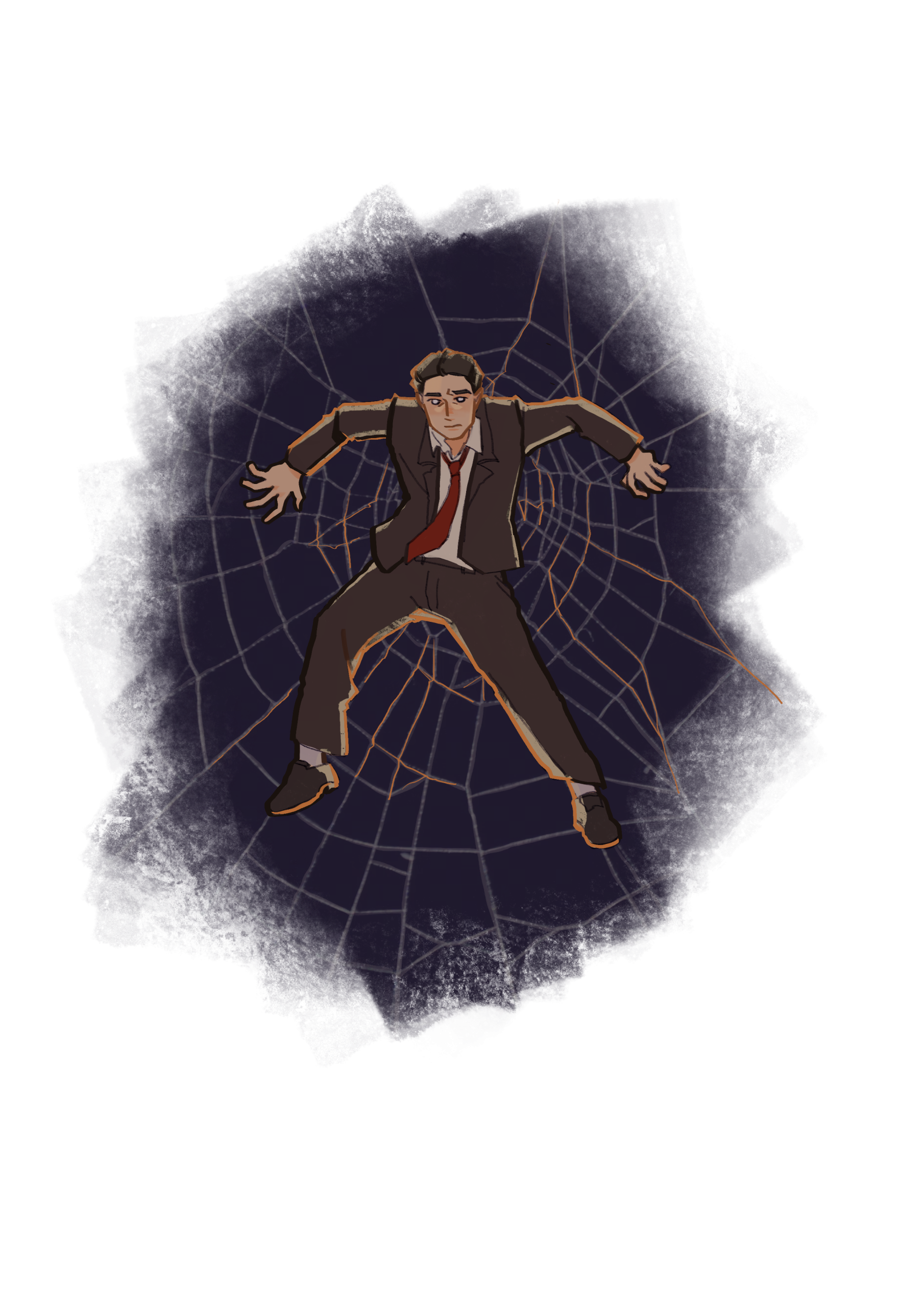
Suppose, now, the situation were reversed and the insect became a functional human being – suited, social, employed. For many, the nightmare would turn in on itself and become a miraculous story of unlikely salvation. From foraging in compost heaps, the once downtrodden insect traipses the corridors of Wall Street making sales from the comfort of a cushty office desk. What greater turn of luck could one hope for?
But this hypothetical protagonist, if we might cravenly bludgeon its dreams, solves nothing of the existential puzzle so daunting to Kafka. It simply manifests a fresh nightmare. What laces Metamorphosis with its moody dejection is not Gregor’s loss of identity, but his loss of recognition. To see without being seen is as bad a fate as any social creature can endure. “How can it be Gregor?”, his beloved sister appeals, “If this were Gregor, he would have realised long ago that human beings can’t live with such a creature, and he’d have gone away on his own accord”. Gregor is damned for showing up as his vulnerable self, and not as others expect him to be. The counter-metamorphosised insect? It is forsaken in a subtler but no less schismatic way: for betraying its real self to meet, nourish, and satiate the gaze of expectancy.
To deliberate over which is worse is to entertain two equally unsatisfying realities. The nightmare behind any existential metamorphosis is the sense that it changes us irrevocably, locking us forever in an alienated form. That we might never be seen again – either because we are too much ourselves, or too much somebody else. Modern life, in all its paradoxical sloganeering, yearns for both. It talks inexorably of finding oneself in the very same breath as it farms LinkedIn connections; of seeking self-actualisation as it buckles each passenger into the seat of bureaucratic, corporate docility.
For so many, particularly in an institution like the LSE, it is a life-or-death race to adorn a suit, to be awarded a place in the social machine, and to escape the verminous condition of the naked human soul. It means taking fewer risks and purging one’s passions in pursuit of what one is expected to want and what one is ‘supposed’ to be. For Gregor, it was precisely this race that wore down every fibre of his being until nothing was left but the meek, out-of-place insect.
The human condition at its best consists of an iterated Becoming. It should look both inward and outward before constructing a bridge between these two worlds. For the self-as-itself is much too delicate, unintegrated, and raw to flourish in its most rudimentary state. But a plastic mannequin, carved in the shape of a functioning member of society and fitted in proper dress, is no less doomed. If Gregor retreated too far inside and became utterly unrecognisable to his closest kin, we might say of the modern, socially engineered functionary that they venture too far out, and thus lose all sight of themselves. Either way, the cocoon stage of personal development must not be betrayed in pursuit of a premature finality that precludes later growth.
If we take one vital lesson from Kafka it ought to be this: fear the metamorphosis not merely for what you become, but for what you prevent yourself from becoming thereafter. Because one final condition, one timeless habitat for the lost soul, might be just as awful suited as it is naked.