
Written by Wafi Ali
Illustrated by Jessica Chan
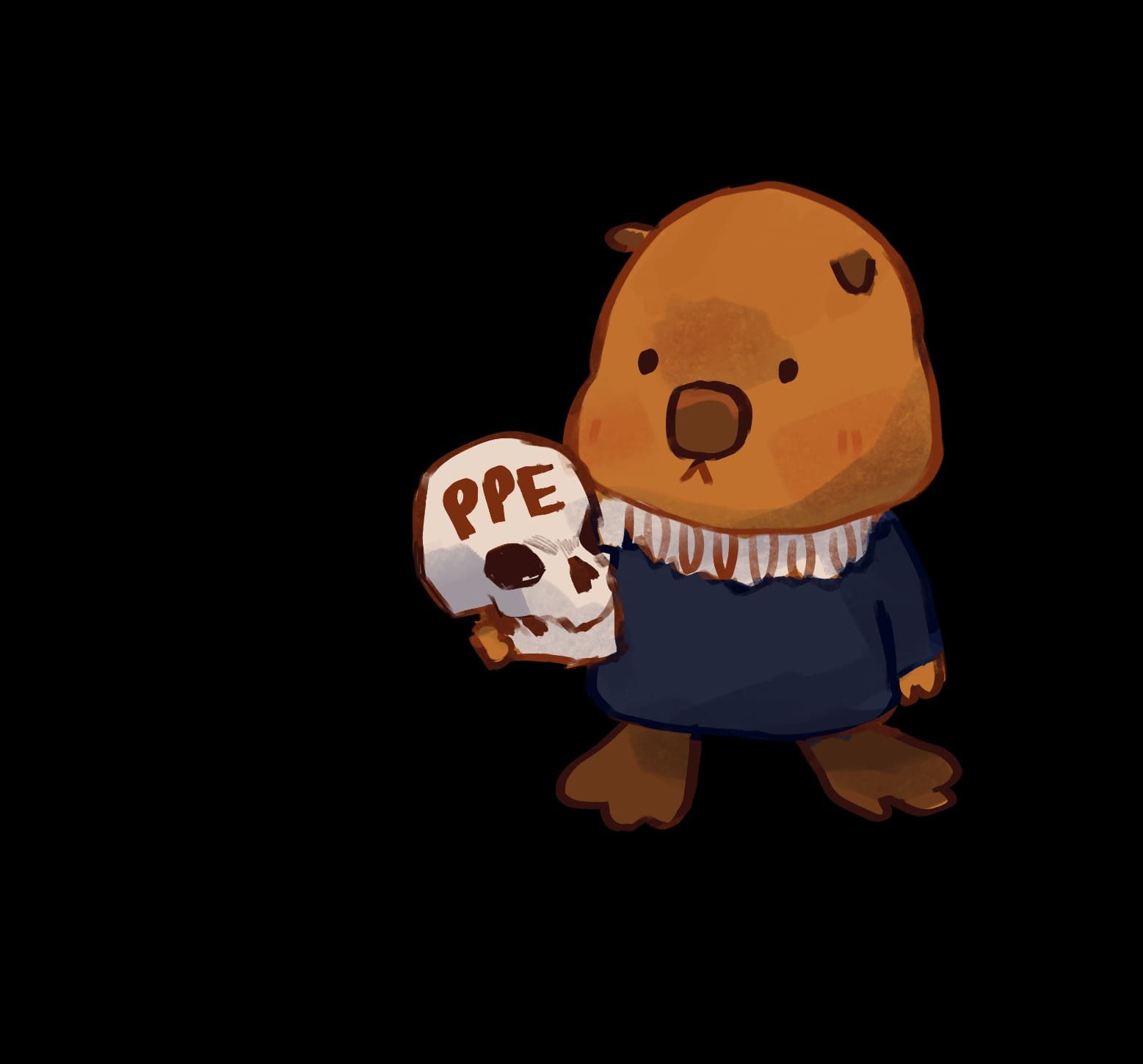
Notorious Prime Ministers aside, beneath the perceived prestige of Philosophy, Politics, Economics (PPE) lies a vast array of career trajectories. From those at a career crossroads, to the finance fanatics, to those simply striving for a holistic worldview, PPE has become an increasingly appealing opportunity for young undergraduates. Yet, comparing Oxford’s venerable PPE stamp to LSE’s distinctive, interdisciplinary enticement poses the daunting question: Is my PPE degree really worth it? Does it grant me the glorified comprehensive worldview that not one applicant forgets in their personal statement?
For some at LSE, PPE can be a genuine intellectual investment, justifying the financial sacrifice of another year of undergraduate study. Yet, in an increasingly cutthroat graduate labour market, where vocational education is seeping in as a game-changer, an extra year to earn a BSc can be a tremendous roll of the dice, even if it may be a year of Capstone projects, interdisciplinary thinking, and contemporary research. Another year. Another £9k. Another fleeting uncertainty screaming: “What if I just did P&E?”.
The Expectations
At this disconcerting time of turbulent geopolitics, there is a clear heightened need for the tools of PPE. Charlie, a first-year PPE undergraduate at UCL, mentioned the pronounced praises one hears from older family members, especially during a tumultuous time of radical political sentiment, corruption, and conflict. There is a revived recognition of academic breadth, undermining decades of hyperspecialisation in favour of a modern return to adaptability. PPE has empowering potential, especially if its methods of teaching are tailored to current globally salient issues.
LSE sets distinctive expectations for its PPE program from the outset. The degree’s promise aligns almost perfectly with the institution’s motto: Rerum cognoscere causas—to know the causes of things. A spokesperson for the Philosophy Department emphasised the “advanced academic training in all three of the disciplines, as well as the opportunity to work on applications of them together, something only achievable because it is a four-year programme”.
Outcomes are clear: Graduates should leave with “developed analytical and quantitative skills”, the spokesperson asserted. Almost all LSE interviewees concurred with this. Rumina and Sam, both first-year PPE students, claimed they were “surprised by the strong emphasis on the mathematical and analytical side of things”, concluding already that this was a fruitful struggle. Although LSE’s quantitative anchor may be immediately apparent, what surprised them more pleasantly was the grounding in political science over abstract political theory, showcased already in their contemporary and application-based GV101 and EC241 core modules. A noticeable difference appeared: engaging with research papers over textbooks.
One student claimed a professor at an LSE orientation day definitively stated: “We do not teach this module with a textbook, rather I am writing the textbook that other university students may use in the future.” This defines the application-centered, originality, and analysis-based thinking that LSE centers around.
Harry, a PPE student at Oxford, characterised this difference as “theory vs relevance”. “Oxford is completely set up for theory to promote further degrees, whereas [at LSE], there is greater focus on helping you get ready for the workplace.”
However, LSE does not seek to eliminate theoretical understanding from its teaching altogether; rather, it positively balances necessary theory with the application. Modules such as EC2C4 and GV100 provide the central theory required for a solidified understanding of the three disciplines.
“I didn’t really have a career plan, so I picked PPE”, one first-year student admitted. For every student targeting the daily tube to Canary Wharf, there are many students simply drawn to the uniqueness and depth of each subject, trusting that a career path will crystallise along the way. For them, PPE can be a powerhouse of perspective, knowledge and breadth.
“Very low rejection rates” for postgraduate programs speak for themselves, and high placement rates in growing sectors of Financial Services, Government, Public Sector and Policy, and Consulting prove that endurance within the PPE program corresponds with better understanding of individual career pathways.
The Verdict
So where does LSE’s PPE program fall short?
Every LSE student has once been the “silent student” of the class, or contrarily, one of the few talkative ones watching the silent students, waiting for a new voice to ruffle the feathers. The lecture and classes combination at LSE, in comparison with concentrated tutorials at Oxford for instance, can limit critical thinking at times of awkward silence, transforming an enriching student-led discussion to a top-down teachable moment.
Therefore, LSE must now look to boost critical thinking within its teaching. The enjoyment of a module should not lie solely in the fate of your teacher’s quality. One student mentioned their summative essay “relied solely on Week 1”, which was “the last reading they properly understood”. As the department spokesperson claimed: “adaptability is in the department’s DNA”, and whilst the university expands, LSE must look towards a structure of teaching embedded within which is greater critical thinking.
Year 4: for some it’s relief, for some it’s woe. Yet, even someone looking at the BSc PPE webpage can discern that the heart of holistic PPE-style analyses and research takes place in the final stretch. As Alex, a fourth-year PPEist recalled, “most undergraduate degrees in Europe and North America last four years, so contextually, it is the norm”. If you enjoy student life and the module optionality of Years 3 and 4, PPE’s enjoyment can be skewed towards the last couple of years.
The Capstone and Research project are both designed to put PPE skills into action, as explained by our department spokesperson: “Students are given a real problem to solve for companies and NGOs”. While the extra year can rub salt in the wounds of mounting student debt, there is a tradeoff that must be accepted when studying PPE.
When asked about the social downside of seeing friends graduate earlier, our fourth-year interviewee deflected the concern. Instead, Alex noticed PPE students are more likely to explore extra-departmental modules, having constantly been pushed to evade a “unitary” myopic lens. On subjects such as the evolution of literature with politics, or the anthropological foundations of economics, Alex stated students are “only exposed to these interesting subjects because of PPE”.
Some do argue the progression of PPE through the degree can require a painful patience, with the first PPE-specific module arriving in Winter Term of Year 2. Most greatly affected are those with clear sights of their career pathway: for them, a fourth year “feels tedious”. However, the first two years of PPE are “designed to ground a student in foundational knowledge of the three disciplines”, without which any meaningful interdisciplinary links cannot later be made.
Finally, the quantitative shock that erupts within LSE from Autumn Term of Year 1 is unavoidable. From orientation in Freshers Week with a mass discussion of the importance of MA108, to choosing Econometrics for the sake of picking a perceived default option, LSE’s quantitative focus can be a mental challenge. It exacerbates the cognitive dissonance that comes with flicking through different states of mind every lecture to adapt to each discipline, and can skew precious time away from Philosophy and Government readings and summative work, only to revise an inordinate set of economic or mathematical assumptions that are violated in the first moment of walking into any workplace. However, as all LSE interviewees stated, the quantitative focus is a valuable endeavour, especially for those who might decide to explore quantitative careers later on.
As the “crowd convergence towards the finance sector” accelerates, there is indeed a question of whether PPE students diverge from this trend. The Oxford student who noted that LSE students “definitely have the networks to cut into” that Oxford PPE students can lack, was not wrong. But those networks come with a tradeoff: an independent career choice versus ceding to a finance trajectory that feels less of a choice and more an alluring current.
LSE has carved out its own PPE path. Its key distinctions nurture well-rounded, employable, contemporarily taught students with “high placement rates” in Master’s degrees and employment. For many, that is plenty to call a degree “worth it”.
But for others who may be unsure about doing it all again, there may not be a straight verdict. Perhaps that fluctuating feeling of content disharmony between the disciplines is itself the motivating driver. The continual search for new perspectives, greater knowledge, and a unifying worldview.
NB: Names have been changed to preserve anonymity.