
Written by Zara Noor
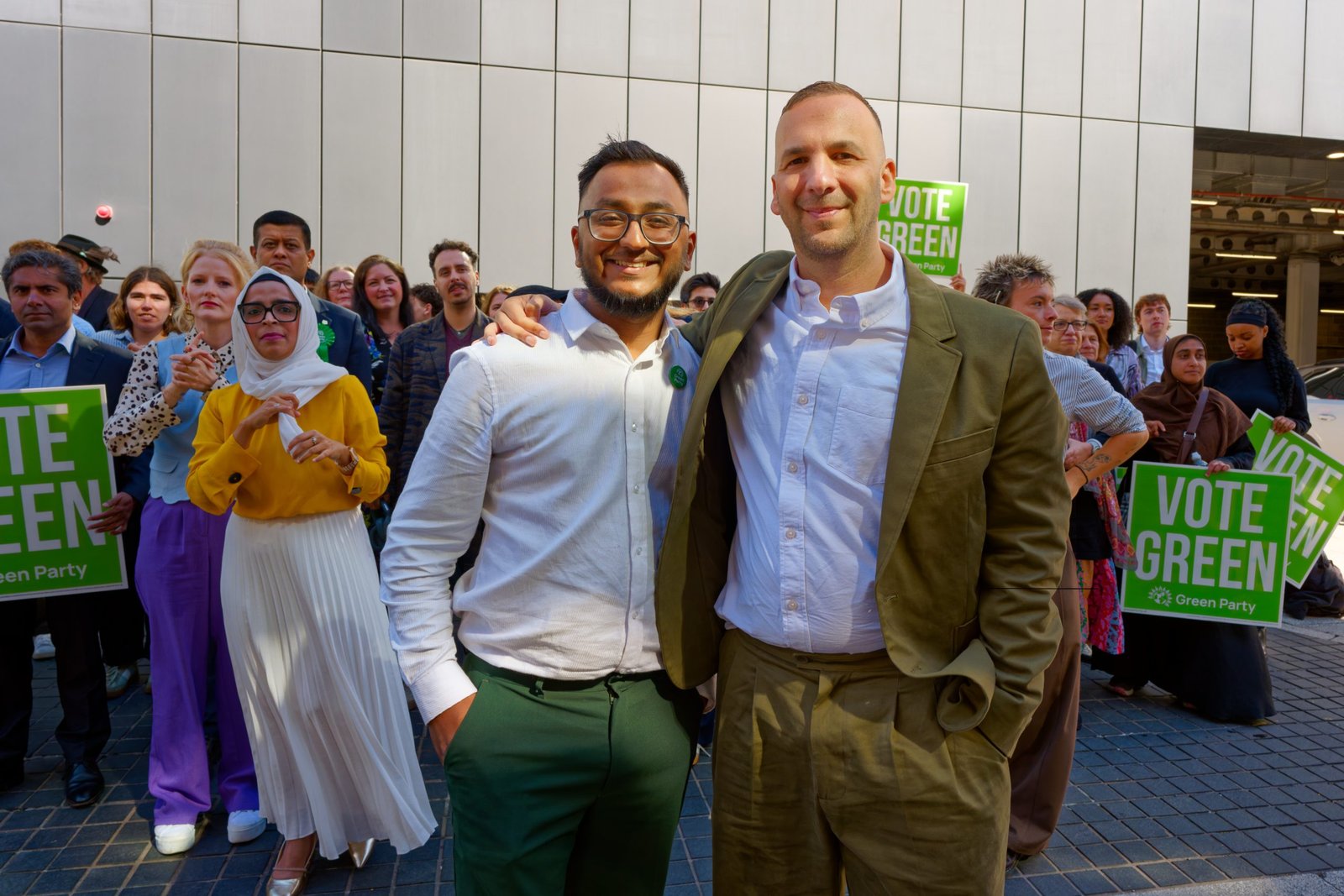
27-years-old and freshly elected to Camden Council, Hamza Chowdhury never expected to be potentially running for MP in the ex-prime minister’s seat, let alone against the leader of his own party.
In October, a by-election for Keir Starmer’s recently vacated seat will be held, and the winner will become the newest member of parliament. Chowdhury ran to be nominated as the Green party candidate against Zack Polanski, the leader of the party, in September. He lost. And yet, although the Green party runs on the platform of hope, Chowdhury tells me he expected to lose. People, honesty, and meaningful change are his priorities, and for him, sending the message that anyone can stand up for what they believe in was more important than winning.
Hamza’s journey to the political mainstream began five months prior, when two Labour councillors stood down, ending a 24-year stronghold in Holborn and Covent Garden ward. An opportunity arose for the Green candidates, endorsed even by their Labour predecessors, with a growing tide of public support behind them. I asked Hamza why he was the right man for the job, and community was at the heart of his answer:
“I think it’s because I’m known in the community, and I want to represent my community finally.”
His connection to the area is undeniable. Hamza and his parents have been life-long Camden residents since his grandparents migrated from Bangladesh in the 1980s. Chancery Lane, Hatton Garden, the road next to the British museum: his family are dotted around the ward and have been as long as they can remember. He explains, “there is no other home apart from this.”
Chowdhury describes himself as the opposite of a ‘career politician’. A seat in local government wasn’t always the end goal, even considering his family roots and personal beliefs.
“I’ll be honest with you, under no circumstance did I ever want to be a councillor. I had a belief, like all other people, that politicians just say something and they don’t deliver, and they just come for the votes and then they leave. (…) Even to be able to become a councillor, it would have been tough because the Labour party in my ward were in power. So if you know you’ve got no chance, you wouldn’t even think about it”.
In the end, the final push to stand came from his friends’ words of wisdom: ‘you’re loud and confident- you should do this’.
Five months on, you’d be hard pressed to argue Hamza hasn’t been confident in his approach. In his words, the Greens in Holborn and Covent Garden have “smashed it”, and he was keen to give me the specifics. Bin bags on the roads? They’re on it. Parking issue? Fixed within days.
One resident in Camden had no safe drinking water for weeks, and no response from the council until the Greens got involved. Within days of reaching out to Hamza, an interim solution was arranged and now bottled water is set to be delivered in batches until the issue is fixed. It’s what Hamza says he loves about the job; being able to stand up for the community and represent voices that deserve to be heard.
On the topic of standing up for what he believes in, the Labour opposition was the primary answer when we discussed what frustrates him most. Tired of “rubber stamping” and reneged promises, Hamza is not afraid to vote against the majority when Labour wave controversial plans through. He and his co-councilor, Jim Monahan, recently raised their hands in opposition to the development of six multi-million pound homes, though they were outvoted. Citing a slew of similarly unpopular planning applications – LandSec’s O2 regeneration, Cantelowes Gardens, and Camden Film Quarter – he said: “This is my borough. This is my home. And I’m not going to let corporate greed and profits come and ruin my hometown.”
As Hamza and I spoke about community and connection, his current endorsement of Zack Polanski came to my mind. Hamza announced on the 7th of September that he would be standing against Polanski for the Green party nomination, in the hopes of replacing Keir Starmer’s vacant seat. His Instagram caption states that the MP for Holborn and St Pancras should be “part of the community”, “present” and “on the ground”. It seems that in his view, local ties are key for adequate representation. This explains why he stood against the leader of the Greens, but doesn’t quite explain his subsequent endorsement of Polanski after losing the internal selection contest. If Camden deserves a local leader, with deep-rooted ties to the community, then look no further than Labour nominee: Sagal Abdi-Wali. Addressing this apparent contradiction, Hamza replied:
“I think we have to be honest, and it is obvious that, you know, Sagal is local. She does represent the area. She’s of Somali background, and there is a massive Somali audience here. So I’m sure there’s going to be a lot of people for her, but the political party that she represents at this time and moment is not looking good.”
Not looking good? I asked Hamza to elaborate.
“I think one because of Sir Keir Starmer and his downfall, right? So everybody across the UK has, you could also say, jumped on the bandwagon and the anti-Starmer vote. Two, I think it’s honesty- Labour said they will deliver and they haven’t, so a lot of people have felt misled. Three, it’s obvious – it’s Gaza, it’s Palestine, and the inability to recognise the issue is playing a massive role within this local vote.”
So, party over person is his reasoning. Although Abdi-Wali is a strong and extremely qualified candidate in her own right, the party she represents is not delivering for people who want change, says Hamza. Looking at the Labour campaign, critics would perhaps say it’s odd that their messaging is aimed at bringing people hope, given that they’ve been the ones in charge. If hope is lost, surely the finger of blame should be pointed their way?
Hamza’s hope isn’t just from a party political message, it’s tied to the legacy he leaves for the future. He tells me:
“In May I became a politician and in September I stood for the former Prime Minister’s old seat, and I was standing against my leader, one of the most powerful voices in the political party. Yes, Zack’s not in power, but he has a massive voice. And people could say, wait, who the hell is Hamza Chowdhury? Who the hell are you? You’re a nobody. You’re just a guy who’s 27, being a councillor for a couple of months, doesn’t know what he’s doing. But it sets a precedent. It sets a precedent for politics, it sets a precedent for the Green Party, and it sets a precedent for young people. No matter how old you are, how much experience you have, or where you want to be, you could go as far as standing against the highest person in the Green Party.”
So what next for this Green party character? He claims he’s already “gone down in history.” Where do you go from there? He’s not keen to be Prime Minister, but running for MP in the future is not off the cards. For Hamza, anything that helps represent his community, his people, his family and friends, is something worth doing. Win or lose, showing people he stands up for what he believes in is the thing that counts.