
Written by Nina Dorigo
Illustrated by April Yang
Having grown up in the music-streaming age, I, like many musicophiles, LOVE a good playlist. As a self-proclaimed expert in the matter, nothing quite satisfies me more than creating the perfect playlist for a moment, season, or feeling. Crafting playlists with a variety of genres diverse enough to impress a niche local record-shop owner is my speciality, and it captures the several different moods I feel in a day.
Recently, however, I was conversing with my similarly music-obsessed parents as we sorted through and organised our much-neglected family CD collection. From just listening to a song, my father can tell me exactly from which album it comes, and the year it was released. My mother is often able to tell me where she was and what she was experiencing when she had a certain album on repeat. It occurred to me that we live in an era where music has never been more accessible, and yet, the criteria by which we appreciate it has degraded significantly.
It was this realisation that pushed me to entertain an experiment: what if I only listened to albums for a month? It’s since been three months, and I am here to report that my habits have changed for the foreseeable future.
I first realised that the quantity of music available at our fingertips is almost detrimentally overwhelming. The combination of streaming services, social media, and algorithmically circulated music means we are constantly bombarded with music in quick, digestible forms. For me, listening to albums felt like the antidote to auto-generated playlists in the same way that reading a book feels like the antidote to doomscrolling. It felt like slowing down, and consuming music more intentionally.
The consequence of this “rallentando” (def. to slow down) was that I really started listening. Playlists are designed by you, perhaps with the help of an algorithm, to evoke and reflect a certain emotion that YOU, the listener, wish to feel. Conversely, albums are a series of musical pieces composed, produced, and arranged in order to reflect the emotions and creative ambitions of the musician. Whilst a playlist feels introspective, there is something deeply interpersonal about engaging closely with an album and the artist who produced it.
I noticed that the mental and emotional associations we hold with songs have become co-opted by social media. More than ever, we listen for the soundbites that accompany the content we consume. As a result, we lose the personally developed connections with the music we listen to, and stunt our own ability to interpret the music for ourselves. One hears Steve Lacy’s “Oh Yeah?” and immediately thinks of a hot urban summer scene with friends. Did Lacy have this preset image in mind when he was writing the song?
Whilst this algorithmically perpetuated association is not problematic in itself, there is something to be said about listening closely to the music in full. To decide for yourself how it makes you feel requires patience. But ultimately, I found it to be profoundly moving, and dare I say, exciting.
Maybe we don’t listen to albums anymore because we don’t have the attention span to sit through their entirety, or because not every track in an album is amazing. However, I’ve learned that if you love certain songs in an album, and you continue to listen to the not-so-great ones, chances are, they’ll grow on you. As a musician myself, I felt like listening to a whole album was like giving that artist the time of day.
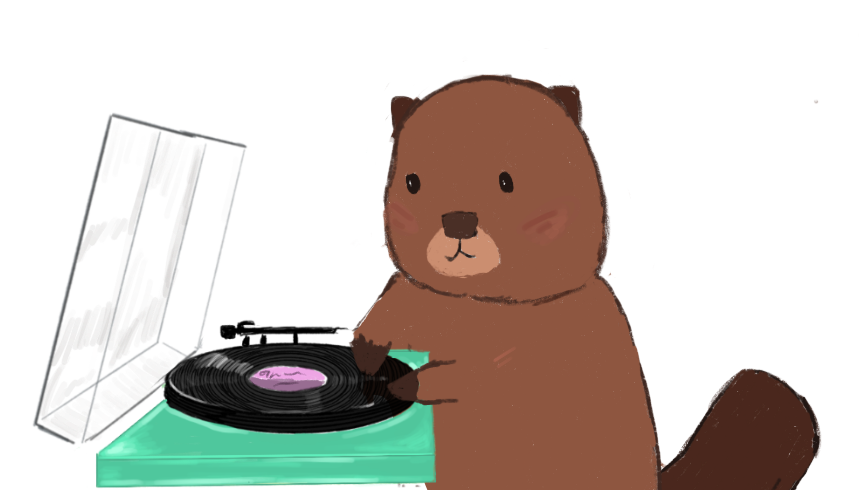
I am by no means advocating for the end of playlists. But funnily enough, my experiment coincides with a renewed popular interest in physical media -e.g. vinyl records, CDs, and film photography. It’s a sign that we, as a society, are halfway there. But this experience taught me that you don’t need to have a vast vinyl collection to participate in album listening. You don’t even need to have an exceptional knowledge of the discographies of all your favourite artists. You just need time, patience, and the curiosity to discover the stories those artists have to tell.
Album listening does not have to mean the end of variety. It’s just depth rather than breadth. It’s an effort to diversify the format of our listening, and experience music unfettered by the cultural and social preconceptions that our modern hyper-accessible music landscape has to offer us.
You won’t catch me swapping my Spotify subscription for a Walkman anytime soon. But when asked “what’s your album of the month?”, I’ll be prepared to answer.
