
Written by Sylvain Chan and Sophie Rose
Photography by Tina Karp
The runway is usually a place to sell an image; this year, it’s becoming a place to tell the truth. In the lead-up to the LSESU Raising and Giving Society’s (RAG) annual charity fashion show on 18 February, The Beaver spoke to its lead director Bryon Lim and the creative team to gain an insight into their production process behind this year’s event — Cultural Capital.
Layered with intentionality and passion, the show offers a relevant reminder that art is always political — bringing a satirisation of corporate culture’s sterility and homogenisation of identity. Following the success of the LSESU Drama Society’s Enron production, the runway echoes similar themes: what is the purpose of art when everyone is trying to join the corporate world?
Dressing for Success
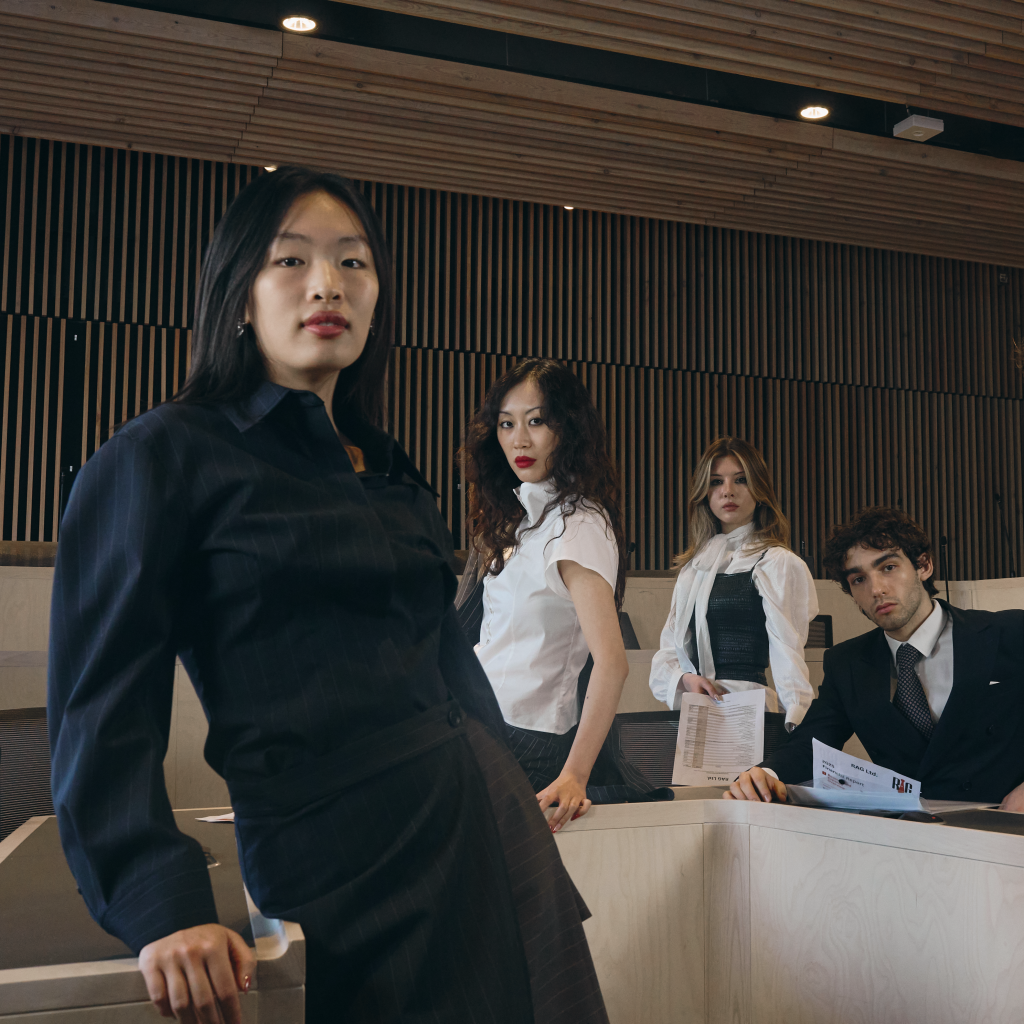
At LSE, clothing often operates as an unspoken shorthand. “We’ve seen the quarter zips and the matchas, the gilets, and the Patagonias,” says production director Annie Noonari. The symbolic capital of these ‘fin-bro’-esque brands, visible in the public consciousness through films like American Psycho, signals ambition and seriousness, where nonconformity to a yuppie ‘greed is good’ mentality can seem isolating. “This show follows that story through the eyes of a student just trying to fit, a position I’m sure we’ve all found ourselves in.”
Across three acts, the production interrogates how corporate culture shapes not just what we wear, but what people should aspire towards. Orlando Ye, the menswear stylist, reflects on the power of style to help one “embody the kind of person that you want to be”.
“I actually think there’s a real authenticity in that because it takes courage to openly show your dreams and ambitions to the world,” he notes, which is why these elements of self-expression are subverted through design to demonstrate how capitalism may morph or constrict one’s identity.
“The wide drapey silhouettes scream excess, the large structured shoulders suggest a sense of self-importance,” Orlando emphasises.
Building on this, Bryon walked us through the runway’s looks, which he thematically refers to as ‘How to best sell your soul’. Many involve parodying and exaggerating office clothing, conveying the workplace’s suffocation through corsets and ribbon-like bondage. Bryon integrates his personal existential career-crisis by creating looks that underscore “how the corporate uniform is extremely pervasive, effortlessly reductive, and [therefore] something I do not ever really want to wear.”
More than a Show
“LSE has a very finance-centric culture and I will be the first to admit that I have participated in it,” Orlando remarks. Many involved in the production sympathised with this tension at LSE, describing the difficulty navigating a space where creativity may be strained against normative ideals of stability and success. “This is why the show seeks to carve out an opportunity for students to consider what they prioritise in life when freed from external pressure.”
Consequently, the show becomes less about rebellion and outright rejection of particular aesthetics, and more about reclaiming autonomy. Through exposing underlying assumptions, the production invites the audience to question how fashion functions on campus, who they exclude, and what more can be envisioned beyond. Head stylist Viltė Barakauskaitė describes the outfits we can anticipate from the third act to feature “trueness peeping from underneath, themes of childhood of rediscovery, bursts of colour, [and] freedom”.
Not only does the team consider fashion as a vehicle of self-expression, but also a way of engaging with the world.
Quoting New Zealand politician and activist Debbie Ngarewa-Packer, Annie emphasises the art does not exist in a vacuum: “‘When you want to get a message out fast, fashion is a way to do it’, and indeed, fashion and protest have always gone hand-in-hand […] The clothes we choose to wear send out a message about who we are, and what we stand for, even if we do so subconsciously.”
Rather than a liminal space of edgy aesthetics detached from campus life, the themes echoed through the outfits’ designs and runway’s palpitating soundtrack act as the team’s commentary on the status quo.
Behind the Seams
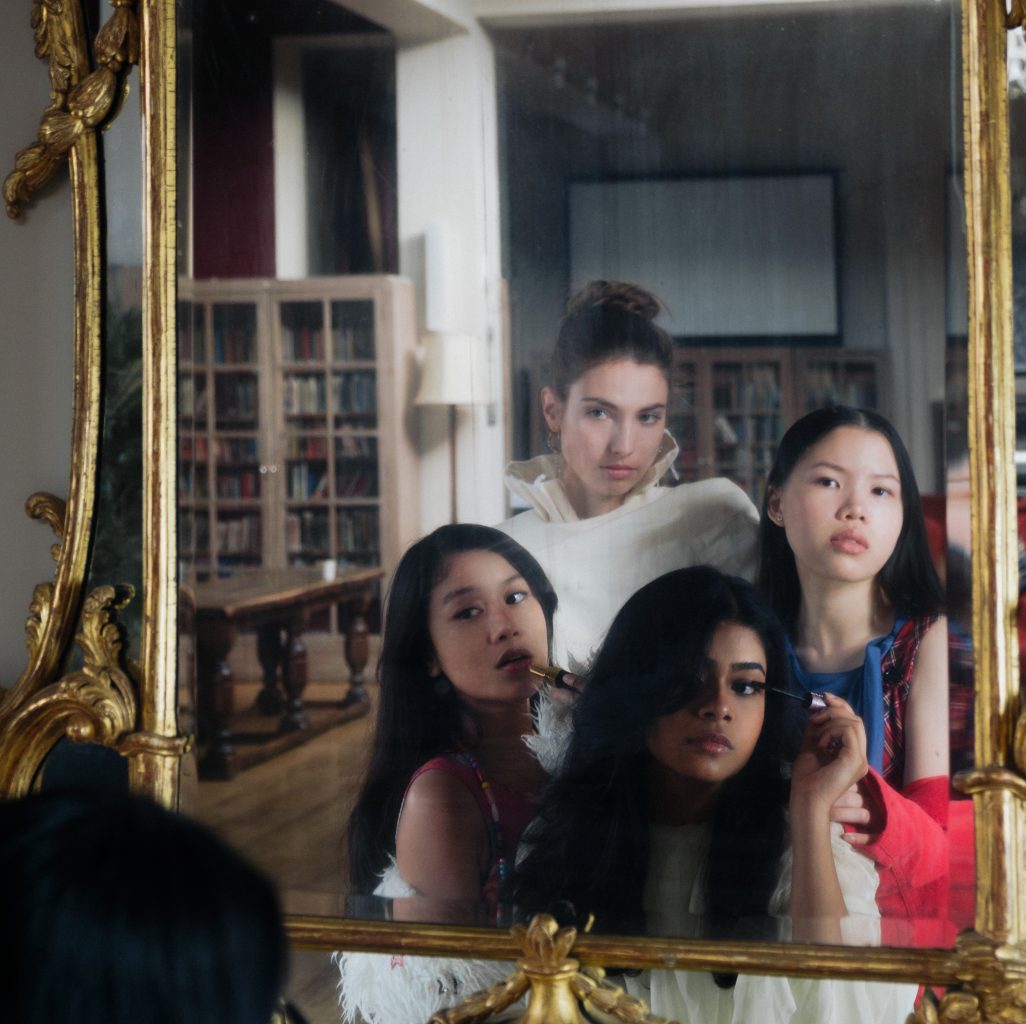
If the show’s message is political, its process is no less intentional. With 66 committee members across disciplines, 75 models, seven designers, and behind-the-scenes collaborators from across London, the scale of production for this year’s fashion show has grown significantly. This diversity in membership seemingly reflects the permeability and enduring nature of creativity.
“I found it really fulfilling to talk to everyone who applied,” Bryon reflects, “[as I realised] the community of artsy, progressive, and subversive people was larger than I thought.” This is especially evident through the show’s magazine: both its creative director, Laura Elena Millán Drews, and co-editor in chief, Carolina Tani, hope to commemorate the sheer effort behind the event within a physical memento that stands as an art piece in its own right. “It’s like a condensed version of the entire ecosystem behind the show.”
The production choices also mirror the show’s wider critique of mainstream fashion. With the support of the LSE’s Sustainability Team, the team distances itself from overconsumption and profit-driven design. The LSESU RAG Society’s president, Joe Card, states that the fashion show has made a No New Clothes pledge: “Rather than buying or making new clothes for the show, we have sourced all of the pieces sustainably: from vintage shops, RAG’s own charity shop on campus, and our contacts in the industry. ”
Models are also given agency over how they present themselves, reinforcing commitment to authenticity rather than spectacle. Bryon succinctly argues that after all, “how [an outfit] makes you feel is more important than how it makes you look.”
Speaking with Shahriyar Ardabili, the show’s media director, he describes their media campaign to bring awareness to the intricacies of fashion as a language and art form, “whether it be [through] advertising via LinkedIn, or parading our most experimental looks around campus”. He hopes this ethos of moving the needle on self-expression reaches those that may not be the ‘typical target audience’ for high-fashion.
When the Show Ends
The team hopes the event will spark conversations that linger surrounding creativity at LSE and the pressure to conform. “Having spoken to some people working on the show and around campus, I noticed this tendency to ignore our hearts and pursue the ‘smarter’ choice,” says Annie. Bryon also encourages students to more consciously consider how one might use their positions within powerful institutions. “I hope people can think about their journeys and whether it’s been meaningful. I want people to ask if they like the version of themselves they’ve become since coming to LSE. I used to have mixed feelings but [not anymore]!” The aim is not consensus, but reflection.
More broadly, the event connects its themes of injustice and expression to tangible forms of support and advocacy. This can be seen through its partnership with The Baytree Centre, a Lambeth-based charity supporting women and girls from marginalised backgrounds, and SANE, a national charity providing free guidance and support to those struggling with mental health. RAG’s third charity partner is Safe Passage International, an organisation that reunites displaced children with their families through expert legal advice and arrival support.
While the performance itself is but a fleeting moment, Laura and Carolina emphasise that raising money for these organisations through ticket, merch, and magazine sales ensures “it extends the impact of the show beyond just one night.”As the lights go down, the question posed at the beginning remains deliberately unresolved. If fashion can function as critique rather than commodity, then what responsibility comes with that? And what might change if students felt less compelled to dress — or live — for someone else’s idea of success?
