Written by Tommy King
The advent of social media is unlike any other technological development that preceded it. Even the great technological pessimists—Aldous Huxley, J.G. Ballard, David Cronenberg—could not have foreseen the intricate peculiarity of humans being in all-encompassing contact with each other besides the crucial detail of their physical proximity.
The automobile was feared because it extended human agency to a deadly bundle of metal; the television because it occupied human living quarters and projected, at its own discretion, whatever it pleased for as many hours of the day as its consumers chose.
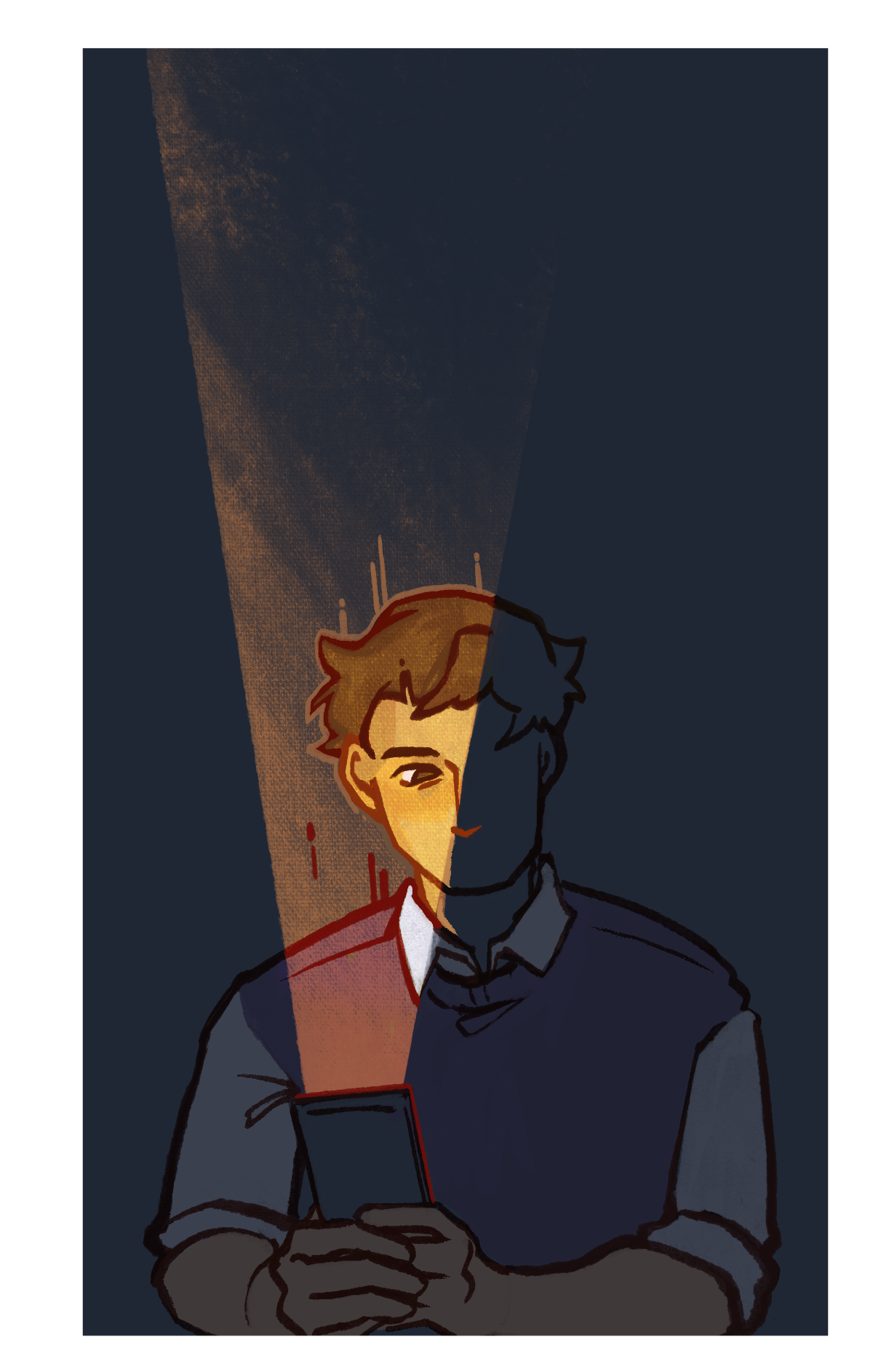
Social media? It should be feared for doing both. The individual lives both vicariously through the buttons they press on their device, and they are passive recipients of what other humans, intertwined in the machinic algorithm, percolate down to them. This is a lethal combination because it renders the medium totalising.
For those who hoped Twitter would become a digital town hall for the betterment of our memetic and intellectual spaces, and who are gravely disillusioned with its toxic, tribalistic output, the 20th century psychoanalyst, Sigmund Freud, proffers a few answers.
From before we are even conscious, we are structured as agents in a world of resistance. The tears of an infant who is told ‘no’ by a parent, and the innocent violence of that same infant as she begins to understand herself as an acting agent in the world, point towards this notion. We are a thing in relation to other things, and the brutal fate of anxiety, shame, anger, and doubt are guaranteed therein.
Freud speculated that emerging ontologically from this conflict with resistance was a ‘death drive’: a pre-conscious, immanent affliction in life itself that tends back towards non-existence. Despite our great love for family and friends, we privately wish to see chaos emerge and misfortune accrue because it shatters the forces of resistance. Like flipping a chess board to avoid losing the game.
Freud’s account might sound far-fetched, even mythical, but there is genuine purchase in the idea that life generates hostility, irrespective of its literal biological veracity. We didn’t choose to exist in relation to other people, yet we do. We are anxious to impress them, shameful if we disappoint them, and angry when they afflict us unnecessarily. Hence we have a ‘death drive’ operating exactly as Freud suspected: inwardly violent in its castigation of our social performances, and outwardly violent in its desire to reclaim the control we outsource to other people’s evaluations of us. Suicidal and homicidal impulses, small and large, ensue.
But civilisation does not admit these impulses. It demands our instinctual aggression be converted into productive energy such that we become reliable, unproblematic cogs in the social machine.
One would deem it good, presumably, to be rid of the tribalist battles and arbitrary acts of aggression that plague the human condition. But the picture is slightly more complex. Freud suggests that these temptations do not altogether disappear. We are not alchemised into more morally complete agents as we simply redirect the primal aggression elsewhere. The residual ‘death drive’, he argues, feeds back inwards until it is absorbed by the superego, which then becomes a brutal moral force geared towards making one ashamed of their flawed existence. Hence, the civilisational proclivity towards depressive, paranoid anxiety. Freud thought this to be the ultimate discontent of civilised man.
Yet, he could not have foreseen sites where the death drive flourishes with so few constraints. On Twitter, Instagram and Tiktok, every precondition for social interaction is established. People speak, joke, display their faces, view others’ faces, spread knowledge, and consume knowledge. Except, crucially, they are dislocated from the limiting factors that underpin a social interaction. The screen, anonymity features, and the off switch, all protect users against the repercussions ordinarily disciplining the social-self.
Before Elon Musk bought Twitter in 2022, he remarked: “Given that Twitter serves as the de facto public town square, failing to adhere to free speech principles fundamentally undermines democracy”. Inviting though the analogy might be, we would do well to slam the brakes on any conception of a town hall existing digitally. Twitter is not an exercise of Athenian democracy, allotting political say to all citizens. It is a malign parody of the town hall, where people’s most pernicious instincts overwhelmingly dominate the discourse. The powerful drive towards anger and indignation that we feel in society is unrestricted by the need to keep things civil. We may insult, debase, or caricature people and positions without fear of being punched in the face or banished from decent society.
Most attractively, we may do all this behind a username and profile picture which nestle us safely in a sea of anonymity. The equivalent—a town hall member with powers of shapeshifting and teleportation—would surely sacrifice the singular identity, with its own interests and priorities, affording them the status of an equal democratic citizen.
“The fateful question for the human race seems to be whether… the development of its civilization will… overcome the disturbance of communal life caused by the human drive for aggression and self-destruction”, Freud gravely warned. The optimist might say, granted it remains adequately regulated, the digital space offers a healthy release valve; that by providing our death drive a virtual playground, we are able to wring it out of the broader social space.
I am far less sanguine. I do not think psychological propensities exist in sum to be added to and subtracted from. Instead, I see them as regulated and integrated. If social media offers the death drive an outlet for its undisciplined weaponization against others, there is no telling the extent to which our digital behaviours will permeate our approach to humanity per se.
In fact, I think we are already observing this phenomenon. Romantic relationships are performed through the slogans that circulate the digital space and minimise the human beings involved, and divisive camps have emerged that reduce the humanity of people to their political positions.
Tragic though these developments are, they fail to capture the true loss. Freud believed that the only thing tempering our death drive was eros: the force of love that builds communities. Our digital spaces not only play out the worst impulses, but they also cut off the human connection that saves us. Algorithms produce self-perpetuating cycles of destructive potential that gradually erode the capacity for an agent’s intervention until nothing remains but the machine.
Perhaps this was the death drive’s logical conclusion: the agent evading its forces of resistance by relinquishing its agency altogether. Like a self-driving automobile. Or a television projected across the world.
If this is to be avoided, eros is the answer. But eros and digitality are, by essence, mutually exclusive. For eros requires the messy space of physical connection, embodied and vulnerable, that screens cannot provide.
Freud wondered whether the death drive would defeat civilisation, or civilisation defeat the death drive. But a third, more devastating fate befalls us: the death drive, reproduced digitally in the throes of civilisation, defeating humanity.