Written by Sylvain Chan
Photography by Oliver Chan
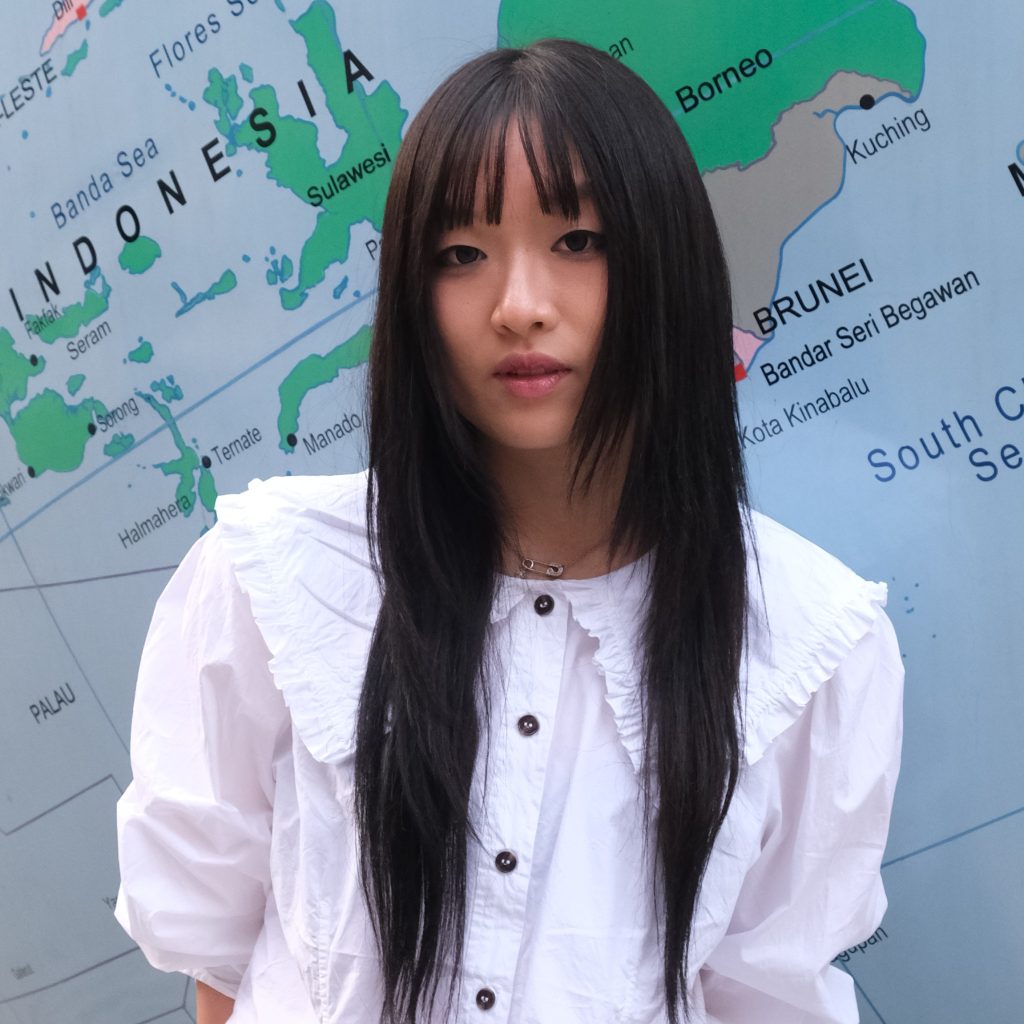
Perhaps you’ve met Kai studying away in the CBG, reading about Bourdieu for her Master’s in Culture and Society. Or perhaps you know her best online on yet another side quest under the alias ‘Nomkakaii’.
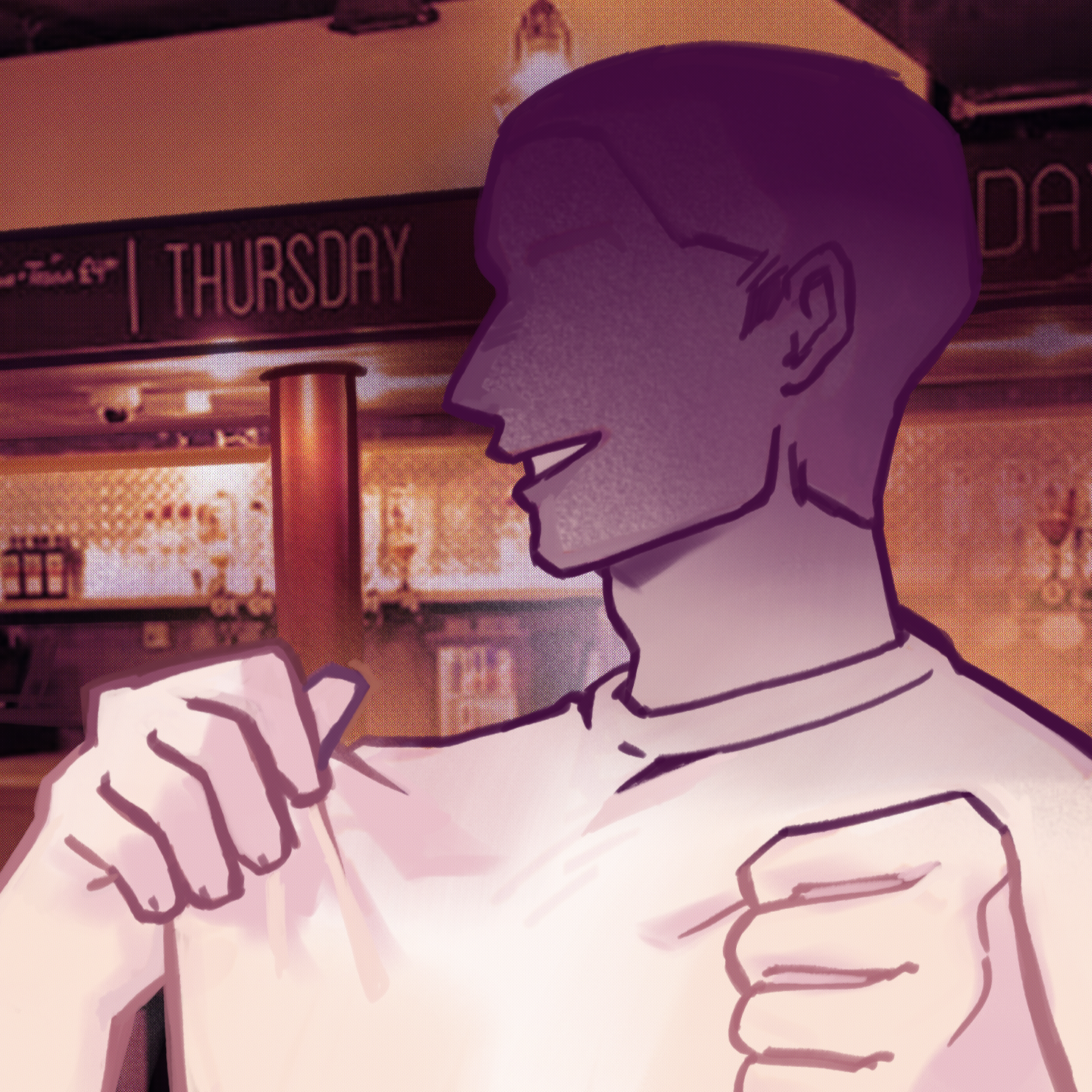
Most simply, Kai is a food illustrator: memorialising the tantalising dishes she eats through digital art. But she is also a creative director, model, and editor.
斜杠青年 — Labelling her profession
Professionally, Kai best identifies as a ‘Slasher’ — someone who takes on multiple careers rather than sticking to one. Resonating with this term came organically: while restless between graduation and finding a summer internship, she stumbled upon Mill MILK’s interview with travel influencer Victoria Yeung (@travelmomentss) discussing her multihyphenate lifestyle as a lawyer and inn-owner. With various skills and hobbies under her belt that she did not want to forgo, Kai “was inspired by [Victoria’s] life to make it work”.
One moment she’s rendering egg yolk melting invitingly into smoked salmon; another moment she’s posed on ELLE-Men; another moment she’s dancing onstage along with the K-pop girl group Aespa. When I first met up with her for a coffee chat, the conversation derailed into discussing her latest collaboration with Genki Sushi and our fond memories of the chain growing up. And as I write this very draft, she recently made her Malaysian debut with Inkling Studio in publishing a zine about being a Slasher. “My adrenaline shots come from projects,” she admits.
“Everyone’s going to find something” — on being a ‘content creator’
Constant throughout peaks brimming with exciting opportunities and quieter moments of personal troughs is her use of vlogging — “I’m not great at recalling things, so I want to have a visual documentary of things that I’m going through.”
With a mindset of maintaining authenticity, ‘influencing’ was not a conscious goal she had when posting on Instagram. “It’s the place to be for art,” Kai says, praising the platform’s primary visual focus. She reflects on her viral ‘Everyday Toast’ series, an ongoing compilation of toast drawings. “I was posting for myself just to get better at Procreate” — the humble origins of a daily challenge which has since catapulted into an exhibition at Ztoryhome last summer.
Her account incorporates video diaries that reflect on these very opportunities, striving to inspire confidence in viewers through her artistic journey with the same vigour as a K-pop idol. “After doing that Aespa backup dancing experience, […] I realised I liked the effect that [being an idol] had, but it’s not necessarily the method I think would best suit me. […] I was attracted to it because there was so much variation, and that’s what I want to do with my career, […] becoming this kind of one-stop shop for everyone. If you’re looking for motivation, aesthetics, inspiration, or fashion, it’s there.”
“I still get inspired by places I go; people I talk to there” — on what motivates her art
Inspiration lies at the core of creation. Kai draws aesthetic influence from the charming narratives in Norman Rockwell’s Sunday Morning Post drawings, and it is clear her main body of work bears traces of Mao Momiji and Victoria Moey’s (@plate.to.paper) tender appreciation for food, tempting audiences for a bite through the screen. It is also hard to ignore the personal and creative role Hong Kong artist Little Thunder has had: I was mesmerised by an alluring rendition of Kai that she illustrated which now rests as her laptop wallpaper, with ‘Kai is a vampire girl’ annotated cutely in the lower left corner.
But art is more than just visuals.
“When you start out, you have these art inspirations, but then when you start getting the hang of what you do, you start looking outside of the art space in general.”
It is a vehicle for conversation and storytelling; her own work birthed from celebrating the hospitality industry. “I started doing toast drawings because I understood how hard it was to run a café … [My art] turned into an […] archive project of wanting to document these places and give them exposure, hoping that it connects to someone.”
“It’s hard to keep projects going […] if it doesn’t have meaning or doesn’t tie into that community aspect. Being able to talk to people that own cafés and [involve] them in the [creative] process, having pop-ups in these places, and giving back through events like that really made me feel like my art was not just stagnant, but something that keeps growing.”
The transnational experience
Kai has held this appreciation for community throughout her ever-evolving transnational identity, though looking inward and discovering herself came in slow chapters.
Doubt about the viability of art as a profession that clouded her judgment while growing up in Hong Kong slowly began to fade away after she studied in New York and Los Angeles, where she developed her own voice. “Things only blew up for me after moving to Japan,” Kai recalled, reflecting on how she had channeled all her energy into content creation after an internship opportunity fell through. Marking a new beginning by bleaching her hair — the visual antithesis to corporate life — content became her escape. “I have to create value for myself, and I choose to trust myself.” It was through this reawakening that she first landed a hotel deal, which led to other collaborations, only then realising that her work had potential.
Having grown up across four different cities, with London being her fifth, Kai surprisingly states she rarely gets homesick, often seeking out comfort food (like toast and congee) and community as remedies. “If it happens, like if I miss my mom, then I’ll call my mom”.
“You either get a job, or you continue schooling” — addressing the beaver in the room
Her overflowing passion for art is evident, but perhaps not as unburdened as it may seem. When I first learned she was attending LSE, I sat up in my bed, bewildered: it meant getting the chance to meet one of my inspirations, but also, why is she at LSE, studying sociology, no less?
Just like the artsy students I interviewed in my previous multimedia spread, Kai comments on the stability of having an academic degree “‘back you up’ to say that you’re legit”. It was also something to look forward to after the summer rather than be suspended in the uncertainty of commissions. However, pursuing academia did not inherently stifle her art career, often describing her master’s degree as a “part-time job”. Even still, she remains grateful for studying in London. “LSE was the most practical and most versatile [option]. I could turn it into whatever I wanted to study,” contrasting her art history offers from The University of Hong Kong and New York University. Going to Europe for the first time also meant seizing new opportunities — “It made sense to go from LA to Tokyo to London. They’re big cities and places that are really supportive of the arts.”
“I’m not here enough to feel that hustle,” Kai laughs as I wipe my face, soot-stained from being engulfed in the trenches of LSE’s grindy ‘career culture’. She acknowledges the intense expectation to find a job upon graduation and paints a more optimistic perspective. “It definitely comes with privilege, to be able to have the time to figure it out, but I think parents can be supportive because the economic situations have changed. […] As long as you can sustain yourself, take care of yourself, and not become a burden to other people, then you’re ok.”
“Art is a really long journey, and there’s no promotions in sight” — on navigating the art business space
Unlike typical careers with a clear ladder to climb, pursuing art often involves creating your own blueprints for the ladder with nothing but wood glue and a dream. “There’s no right way of doing things,” Kai laments, “and because the industry is so big, you need to find where the gap is”.
Breaking into the industry can feel daunting: “you also have to be an entrepreneur,” — creating art, managing finances, and sustainably building your personal brand. But the benefits lie in its elasticity: “Art is such a long career that you can build it alongside your other careers,” and gain clarity through varying experiences to realise the exact path you want to take.
On behalf of all uncertain LSE students, I asked Kai what it means to find the courage and carve out these opportunities for yourself. “Confidence is something that’s built,” she responds, encouraging a “feel it to make it” attitude rather than bluffing through life without contributing anything of substance. She underscores the importance of having a goal in mind when attending a networking event, but dispels the valorisation of simply showing up. “To me, networking only really works if you have a connection with someone […] you need to authentically care about what someone does.” And it goes both ways — “Ask yourself, ‘are these the people I want to surround myself with?’”
“I love being busy” — on self-fulfilment and the future
When I brought up her feature on ELLE — somehow not even in the top 3 of her accomplishments — Kai showed me her Hobonichi planner, where she had listed wanting to be on the magazine under a page titled ‘100 goals’. It was almost like a divine feat of manifestation, though it’s clear that passion and persistence have led her to where she is right now. So, where to from here?
Kai interrogates her desire to stride upwards. Ventures such as appearing in Forbes may seem glamorous, but “capitalism works because it keeps feeding people ideas of what they think they should want.” Though impartial to academia, she is also considering a PhD: “I have to constantly understand more about the system that I’m in to be able to change the system, especially for artists.” Ultimately, she seeks to continue to make meaningful art and give back to the community. She speculates that this may not just come in the form of bringing her ‘Everyday Toast’ exhibition to London, but also conquering new horizons wherever she goes.
Whether engaging in LSE societies, podcasting, rapping, modelling, or voice acting, she states, “my audience thrives when I’m thriving.”