
Written by Zara Noor
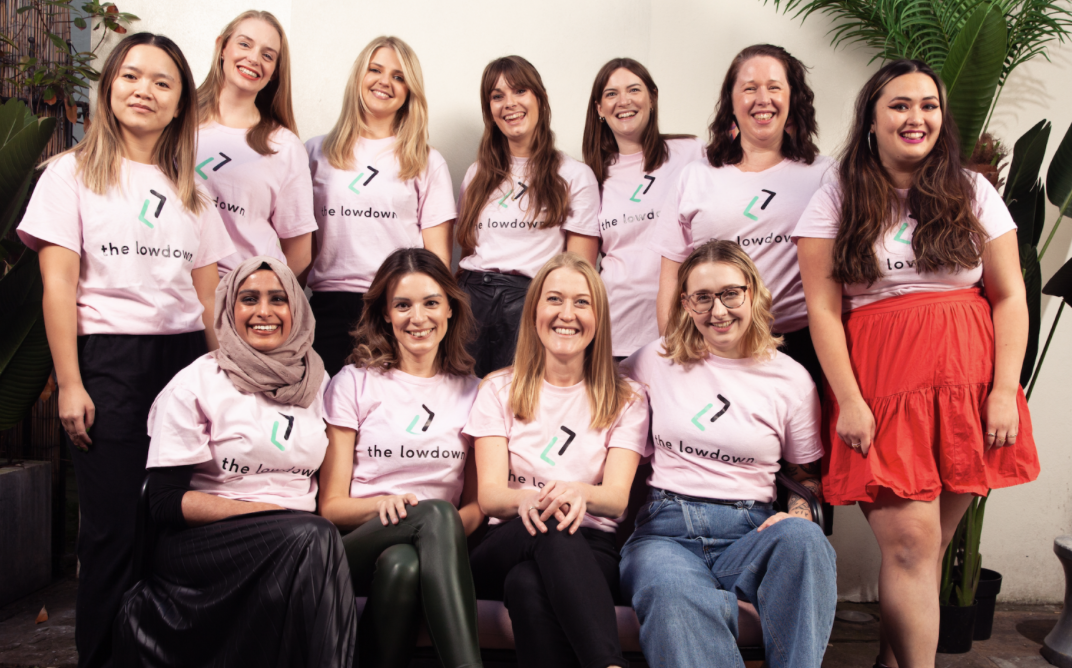
Photographs by ‘The Lowdown’
I have always liked complaining. The traffic, TFL, the weather (hot and cold alike), how difficult it was to find matching socks this morning. My glass is always half empty, and I’ve often knocked the cup over entirely. Romanticising my inconveniences stops being fun, however, when they start causing horrific and debilitating consequences. For many women, bad experiences with health, periods, childbirth, and contraception are brushed off as part of life, despite being more than a mild annoyance. Part of growing up. Something to complain about with friends, but with no real solution possible. Alice Pelton, LSE alumna and femtech pioneer, saw things differently. She saw a glaring gap in medical research and an opportunity to platform women’s concerns.
Her website – ‘The Lowdown’ – is a space for women to review and research their health conditions, where medical expert advice is coupled with a community forum. Users can explain their experiences with contraception, period pain relief, IUDs and more, often in frank and harrowing detail. Browsing through, I felt both sympathy and anger on behalf of women who described their experiences like this:
“Insertion was a nightmare”.
“The implant on both occasions made my life miserable”.
“After about a week my body hit complete exhaustion, I was sleeping for 16 hours straight and crying non-stop”.
Pelton’s vision was to create a platform for these voices, to allow others the opportunity to learn from users’ experiences and make informed decisions. The website offers the following ethos: ‘We believe that listening to women’s experiences of healthcare is crucial to improving it’. No longer just a fact of life, women’s health is given a space to be taken seriously. Pelton is no stranger to these problems herself, having struggled with low mood linked to contraception. I asked whether there was a specific moment that turned her personal experiences into the idea for a start-up. She replied:
“I had the idea for the lowdown when I was on holiday with my husband, we were travelling in New Zealand. We were out for dinner and we were talking about the problem, and I said I can’t believe a review platform doesn’t exist. The actual idea, I think the moment I realised I wanted to build it was, I set up a survey that I sent out to my friends, and I had something like 500 responses in a couple of weeks, and people who were like telling me everything about their contraception experiences. I think that was the moment when I thought, wow, the fact that people could be bothered to fill in this survey was in itself validation that this was a good idea.”
Community was the start of the idea for Pelton, and continues to shape and nurture the ethos of the platform as it has grown into a flourishing network. Her words will sound familiar to many, I’m sure, who have sat around complaining about their cramps at school, lamented about hormonal contraception at university, and felt ignored by doctors as adults. LSE, now, has started to make changes from listening to women’s concerns, for example by introducing free period products on campus (thanks to our General Secretary and previous Women’s Officer, Amara). But in 2007-2010, when Pelton was studying, she reflected: “I’ll be honest, I don’t think there was much of the discourse around femtech or women’s health when I was at university. 15-16 years ago, this wasn’t really talked about, so I can’t remember any discourse about anything like this”.
Although the conversation on women’s health has much improved, and more people are conscious of the specific barriers women and people with periods face to accessing care, there are still immense problems. I remember experiencing horrendous period cramps all through my early teens. As an adult, I can’t say this has abated much, and a new host of problems came when I started having sex and using contraception. When I’ve complained to a female friend or family member, I am always met with sympathy and an immediate ‘me too’. In the (very distant) future, when having children might be on the cards, I anticipate a further slew of things to worry about, especially as Pelton felt the same.
I asked what areas of women’s health still need work, and her response was shaped by the eye-opening experience of pregnancy and childbirth.
She says: “I started ‘The Lowdown’ when I hadn’t had children, and going through two pregnancies I learned a lot about pregnancy and breastfeeding. I’d say there are areas that need focus, one is astonishing in today’s world – we don’t have a more accurate way of measuring the size of babies in the womb, it’s literally like a dark art. I had lots of growth scans with my first son, who was measuring small, and I just couldn’t believe that we could put things on Mars but we literally can’t accurately size a foetus.”
The world of childbirth seems terrifying to me, not only because of the seeming lack of technological focus, but also because of the contemporary discourse around women’s reproductive rights. My own (awful) experience with abortion care was in 2023, when the fear in the aftermath of Roe v. Wade was at its peak. This era saw a huge surge in traffic on The Lowdown from its US users, and prompted the development of a US-specific website from the increased demand. I understand the fear, as reproductive rights often feel like two steps forwards, one step back. It feels like we’re all waiting with bated breath until it becomes one step forwards, and three steps back.
However, according to Pelton, we are starting to see “a bit more progress”, particularly as abortion has recently been decriminalised in the UK, making things “not as scary as [they were] back then”. For all the anxious people out there, things are gradually improving.
Strides are being made in some areas of women’s health, but women aren’t the only beneficiaries of reproductive care. Recently, half-joking and half-not, I signed my boyfriend up for male contraceptive trials in California. Sadly, he can’t attend as he has a degree to finish first, but it made me consider the transformative potential of male birth control. Pelton agrees, suggesting that it will become “a huge shift in humankind, really, when men can use contraception, and it will bring a whole load of new [questions about] ethics”. She explains, “you know like in COVID people used to have vaccination passports, I think it will almost be like [that], if a man says to you he’s taking the pill – do you believe him? Do you want evidence?”.
She’s right – a male contraceptive would undoubtedly be a positive development in theory – but will we trust male integrity on such an important issue?
It raises a broader question, how safe will women really be if technology develops without considering potential misuses?
Only time will tell what the future holds for femtech. By the time male birth control rolls out, which Pelton anticipates will take at least half a decade, she has no idea where ‘The Lowdown’ will be at that point. She hopes to still be working in women’s health, advising and supporting new companies, and adding to the wonderful network of candidness and transparency she has built. Until then, I encourage readers to make full use of her (free!) platform, and hopefully approach birth control with a little more knowledge and a little less dread.
Personally, I have a few reviews I’ll be writing myself – putting my love of complaining to good use at last.