Written by Wafi Ali
Photographed by Finn Joughin
“One Palestinian prisoner was bleeding in multiple places, bruised, and his mother stood up in the courthouse, screamed out, and collapsed onto the floor, shouting and crying. My escort police officer turned to me and said, “Welcome to Israel”. Was it so common to him that it was funny or was he cynically aware of how wrong that was? Still to this day, I don’t know”, Finn says.
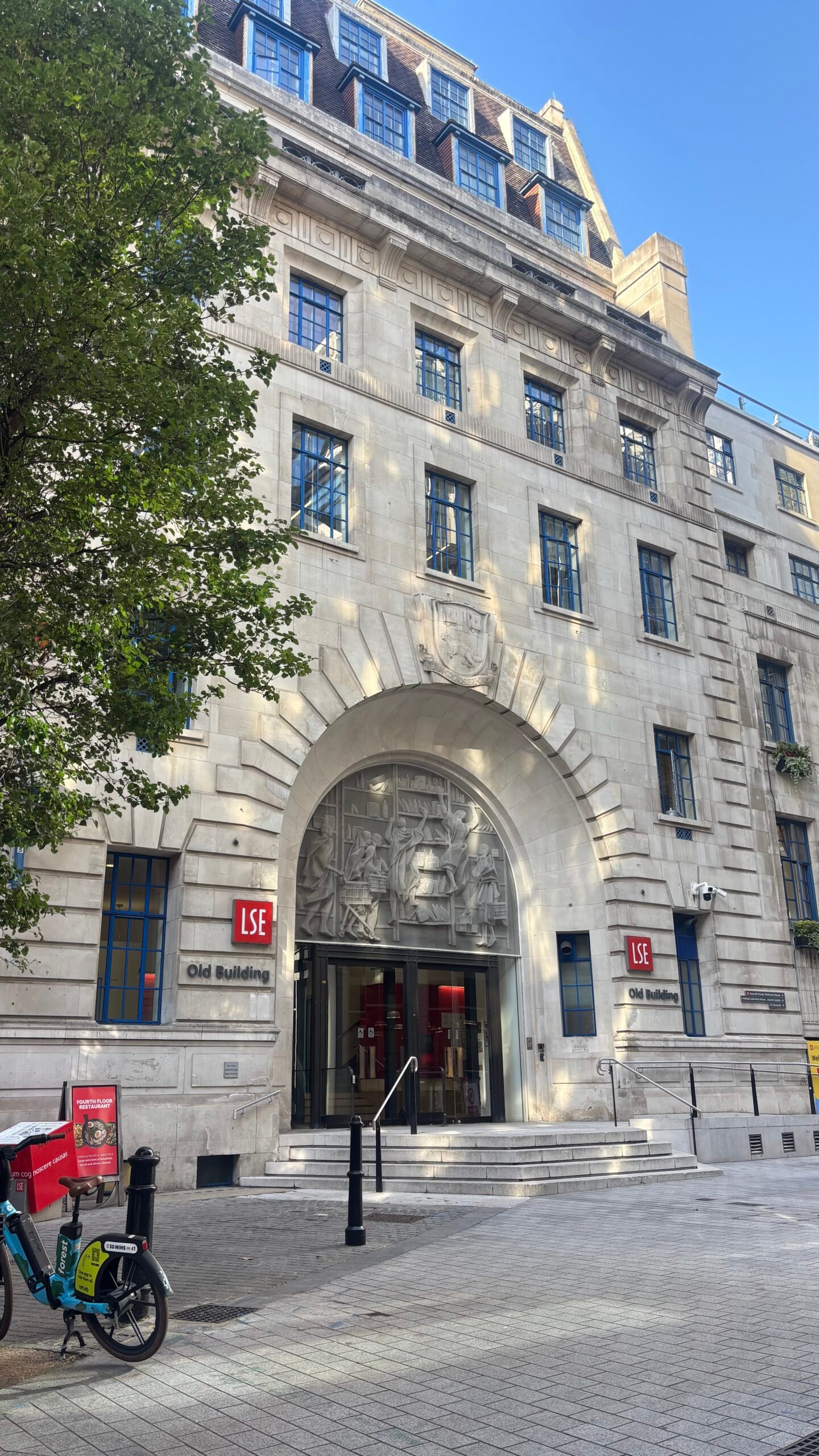
On 29 August 2026, Finn Joughin, an LSE undergraduate, was detained and arrested by Israeli authorities for assault, which soon escalated to allegations of ‘indecent acts against a minor’. Finn, who had been volunteering in the Palestinian West Bank at the time, was released on all charges and deported to the UK on 31 August 2026, receiving a 10-year ban from travelling to Israel.
“Like a classic LSE student, I was looking for an internship or something to do over the summer”, Finn says. “I was already politically engaged in the topic. London is a big place for pro-Palestine marches, and for lots of people our age, the conflict has been one of the big moral questions of our generation.”
Commenting on his day-to-day activities, Finn says, “I was doing a human rights course, which meant speaking with lawyers from Hebron, the wives of martyrs, and human rights activists, some of whom helped create the Oscar-winning documentary No Other Land.”
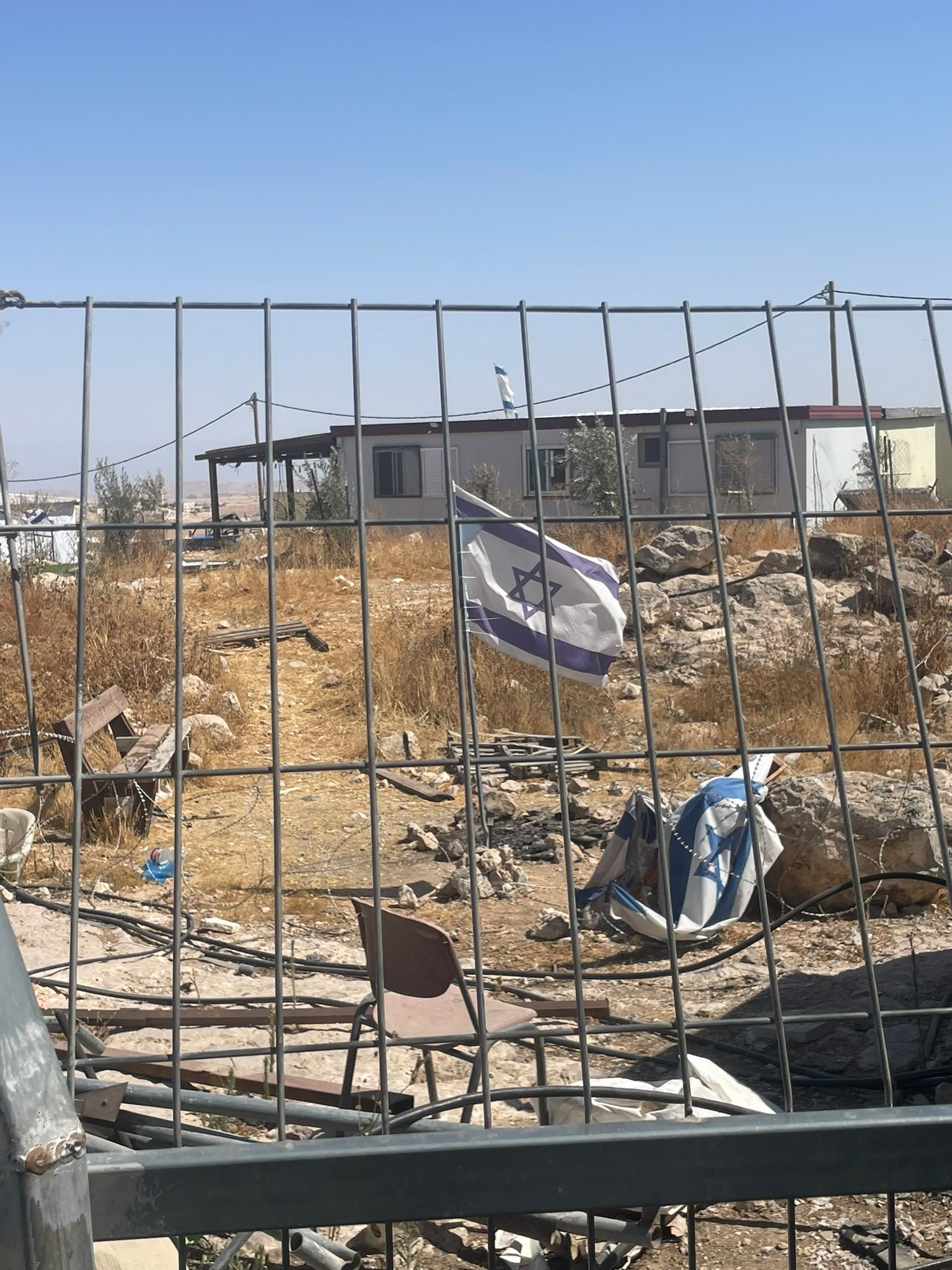
In the Palestinian village of Umm al-Khair, “there are many Bedouin communities surrounded by Israeli settlements, which puts them most at risk of displacement”, Finn says. He described an outpost built on the west side of the village and a settler industrial farm on the south side. These settlements are illegal internationally but legal under Israeli law. The outposts are illegal under Israeli law but are often tolerated.
Finn’s role as an international volunteer was “protective presence”. “International volunteers stay in the community, present when settlers come to either harass someone or break their property,” Finn says. “The idea is that recording will deter them from doing anything particularly bad.” However, because there are “increasingly radicalised groups of settlers who don’t really see a distinction,”“What they’ll say is the Palestinians are all terrorists, and the international activists are all anarchists.”
One anecdote Finn remembers is of a Palestinian man: “Half of his garden had been claimed as survey land. His outhouse had been barred off with fences and his goat pen blocked, so he needed permission from the military just to feed his animals. There was even a camera set up directly outside his daughter’s bedroom.”
Finn added that building permits for many of the Bedouin communities are very difficult to obtain and present, despite having been in the West Bank since 1948. Of those who do have legal land grants, the Israeli authorities do not accept their documents. “Often, the Israeli state can present demolition orders,” he said, “and the Palestinians have to rebuild the house at night, under the cover of darkness”.
“It was remarkable how intelligent kids as young as seven or eight were about the way their lives operate,” Finn says, “how conscious they were of the fact that their dad may have been beaten up by the IDF or that many had lost a family member at some point to an accidental shooting in the dark.”
Before Finn’s arrest, he had been volunteering daily for over two weeks. “Every Friday evening, the members of the outpost would go to the synagogue for community prayer and return through the Palestinian village, brandishing automatic rifles and handguns,” Finn says. This followed a law passed by the Israeli government, handing many settlers in the West Bank state-mandated weapons to protect themselves. “Some of us and the Palestinians stayed up all night in a special room, in case of a sudden raid on the village,” Finn adds.
It was a late Sunday afternoon and Finn was playing football with some Palestinian children. “I remember they were all playing barefoot, so I took my shoes off too, ” Finn says.
“At some point, a swarm of Israeli teenagers surrounded me, shouting in my face, so you could feel the spit against you,” Finn says. Finn stresses that “it’s a very difficult line to walk, watching people destroy someone’s property, knowing you have no recourse to stop them”. However, “the children of the settlers are in some way victims themselves,” Finn says. “They are educated through what seems like a homeschooled religiously fundamentalist worldview, and are utilised as soldiers in a war they don’t understand.”
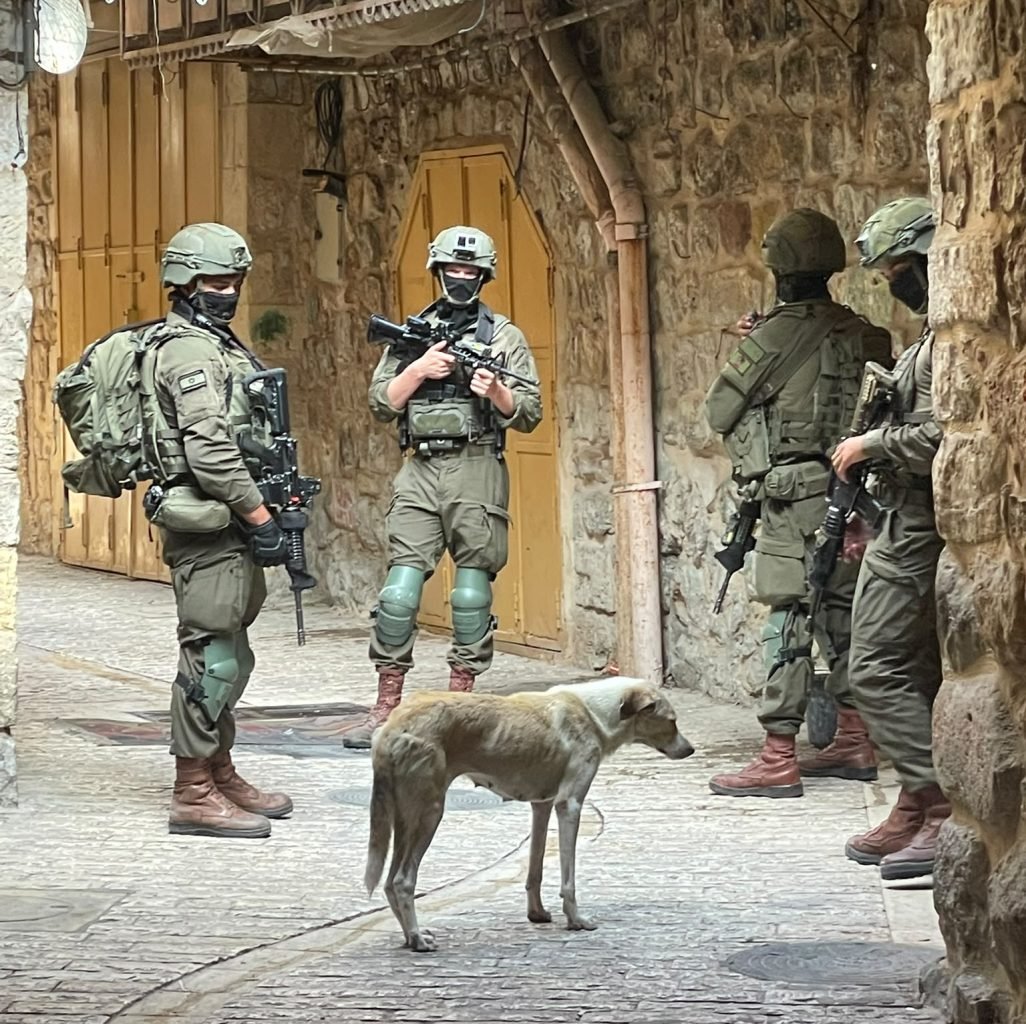
Finn was then approached by adults, one of them armed with his AR-15, who grabbed him by the arm. “Before I had the opportunity [to rejoin my group], two other guys came from behind,” Finn says. “I was placed into a chokehold and I had my arm twisted behind my back.” News outlets such as Al Arabiya and Al Mayadeen circulated online footage of Finn’s encounter with settlers.
“I remember one of them made some comment about my friends in Iran, who I was obviously here to help”, Finn says, “and then I was unceremoniously dumped in a shelter.” Questioned by two men in military uniform, Finn says the only word he parsed was “anarchist”. “I tried to explain to them that I’d been assaulted, but he literally spit in my face,” Finn adds.
“In the morning, I was immediately handcuffed, and put in leg chains”, Finn recalls. After hours of waiting at the courthouse in Jerusalem, the judge decided not to hear Finn’s case; instead, he would be deported.
Finn encountered a similar line of questioning at Ben Gurion Airport. “It was another two hours of being asked what I thought about Israel, about Hamas, and Iran, and whether I thought the West Bank seemed Israeli or not,” Finn says, “They’re not interested in whether or not you did the pretend crime that they’re accusing you of, just getting you on a blacklist.” Historically, Israel has denied entry to and deported many international volunteers and activists.
“You have to bite your tongue and just be ready to be diplomatic about it.” Luckily, Finn avoided being sent to detention. “I was able to sleep in the office, on the floor. I was fed on airline meals, and eventually, put on the direct flight home,” he says.
But only five days after his return, Finn says he felt “resigned sadness”. “I saw [on Instagram] that the same people were back in the village doing the same thing,” he adds.
Yet, Finn points to a silver lining. “One thing you see when you’re on the ground is how weak the settler position is,” Finn says. “Fundamentally, [the settlers] are living in makeshift, caravan-style houses.”
“The solidarity, the steadfastness, the resoluteness of the people that I met is incredible,” Finn says. “The only way that the settlers can exist is through continual suppression; it’s a situation that cannot maintain itself permanently.”
“I listened to a Palestinian journalist there tell his stories with a smile on his face, speaking of the time he was shot with a rubber bullet, the time that he was gassed and the time his friend took a sniper bullet through both bum cheeks,” Finn adds.
Commenting on the “deep irony” of his experience, he says “many men have been arrested by the Israeli army, perhaps repeatedly, and held without charge for prolonged periods, in poor conditions. I was held in prison for 24 hours, and it was headline news.”
Finn concluded, saying, “My treatment was pretty good. I had the luxury of coming from a country that has relations with Israel. There are lots of people who do not have that opportunity, who sometimes never show up again.”
The past three years have shown a society that can rapidly rally behind a social standpoint online, but reposted statistics and detailed reports only exercise our agency so far. Whilst Finn’s story seems unique, it is a thread in a fabric of hundreds of international volunteers. What makes Finn’s story “surreal” is not the storyline or the fact that he was an LSE student, but the raw emotion, realism, and vivid harshness; Finn shows that moral courage and resilience are all it takes to make a difference.
The Israeli Embassy, IDF Spokesperson and COGAT Press Office were asked for comment but did not respond in time for publication.